Terrace & Roof Waterproofing
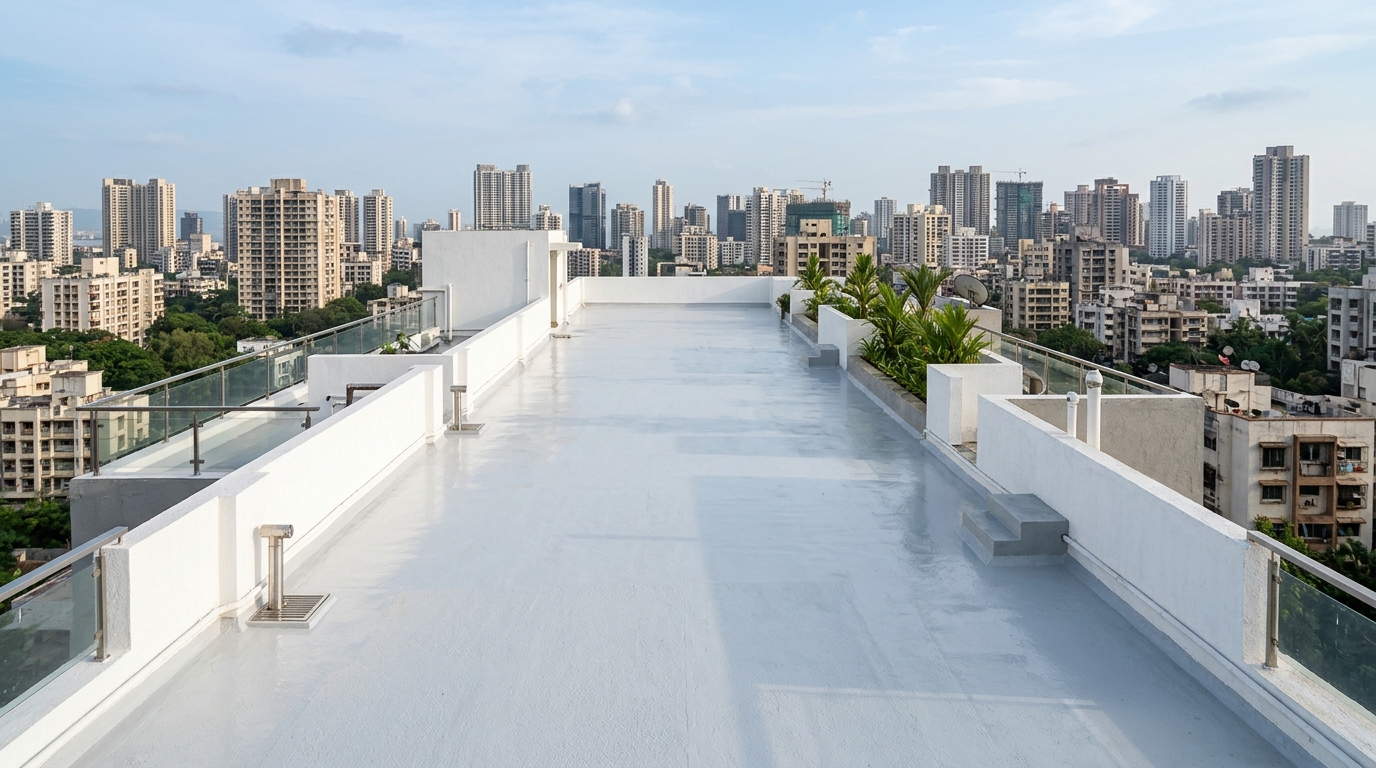
Durable protection against rainwater pooling, cracks, and ceiling dampness across flat and sloped roofs.
Connect with independent waterproofing professionals for terrace leakage, bathroom seepage, damp walls, basement protection, and industrial roof repairs across Gujarat.
Connect with a qualified waterproofing contractor in your Gujarat area.
We streamline the process of finding dependable local waterproofing contractors without agency markups or hidden fees.
Describe your issue in under a minute without creating an account or paying any platform fees.
Comprehensive coverage for flats, independent bungalows, housing societies, and GIDC industrial plants.
Completely free to evaluate, compare, or decline contractor quotes with total freedom.
Notice: WaterproofingConnect is an independent referral and lead-generation platform. We connect property owners with independent local contractors. Technical inspections, quotations, material selection, workmanship, and warranties are the sole responsibility of the contractor.
From top-floor terrace cracks to bathroom dampness affecting neighbors below, discover the most common home leakage repair categories across Gujarat.
Durable protection against rainwater pooling, cracks, and ceiling dampness across flat and sloped roofs.
No-break tile waterproofing, concealed pipe inspection, and grouting for wet areas and toilets.
Effective treatment for rising dampness, efflorescence, paint peeling, and exterior wall cracks.
Complete home leakage protection for bungalows, flats, balconies, chhajjas, and planter boxes.
Comprehensive society building packages: common terrace, plumbing ducts, external facades, and lift pits.
Heavy-duty solutions tailored for Gujarat’s manufacturing estates—including corrugated metal roof sheet lap sealing, warehouse gutter rehabilitation, basement retaining walls, and water tanks.
Heavy-duty waterproofing for factory roofs, GIDC sheds, manufacturing units, and commercial complexes.
Metal sheet lap joint sealing, J-bolt waterproofing, valley gutter restoration, and skylight leak repair.
Positive and negative side waterproofing, high-pressure injection grouting, and retaining wall treatment.
Non-toxic, food-grade certified waterproofing for underground sumps and overhead concrete water tanks.
We provide a transparent, hassle-free bridge to find qualified local waterproofing specialists across Gujarat without broker markups.
Submit your enquiry, request quotes, and connect with local contractors at zero cost. There are never any fees or platform charges for homeowners or societies.
Coverage spanning Ahmedabad, Surat, Vadodara, Rajkot, Bhavnagar, and key GIDC industrial corridors including Ankleshwar, Vapi, Sanand, and Morbi.
Connect directly with independent contractors who inspect your property on site. Receive formal written quotations with transparent chemical specifications.
Chemical solutions tailored for Gujarat’s extreme 45°C summer thermal expansion on China mosaic, as well as relentless southwest monsoon downpours.
You remain completely free to evaluate, compare, negotiate, or decline any proposal. You are never pressured to accept an inspection or hire a contractor.
Your contact details are kept secure and shared exclusively with relevant local specialists to evaluate your specific inquiry. No unsolicited marketing calls.
We operate as an independent bridge connecting property owners with qualified local service providers across Gujarat.
Fill out our 60-second form with your property type, leakage symptoms, and Gujarat city. No registration, payment, or app install required.
We transmit your enquiry securely to suitable independent waterproofing contractors with active availability in your specific Gujarat town or GIDC.
The contractor contacts you directly to schedule an on-site inspection, inspect the leakage source, and provide a formal written estimate. You decide freely.
Waterproofing is never one-size-fits-all. A hairline crack on a China mosaic terrace requires vastly different chemical treatment than thermal expansion along an industrial metal roof or rising dampness at a plinth level.
Catching water penetration early prevents concrete carbonation, structural rebar rusting, and expensive emergency repairs. Identify your symptom below:
 Symptom 01
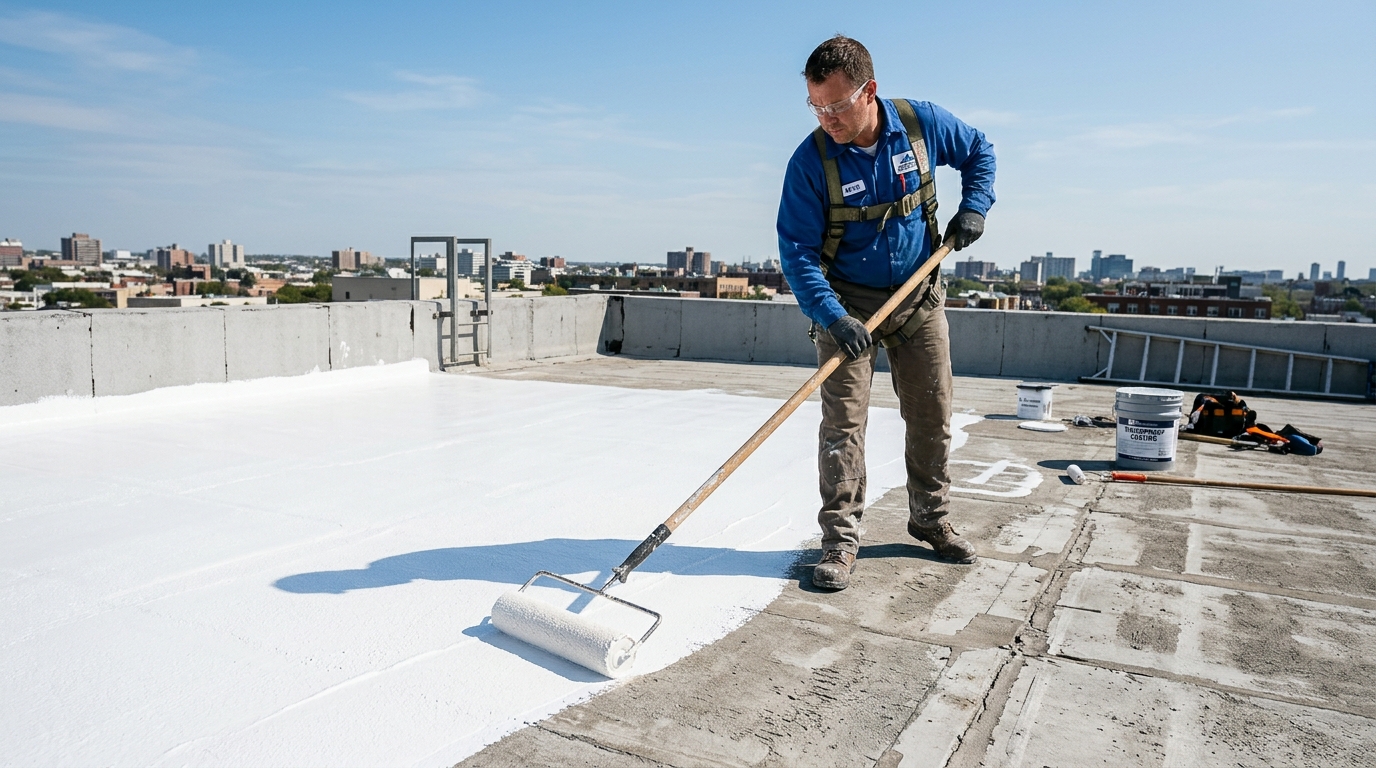
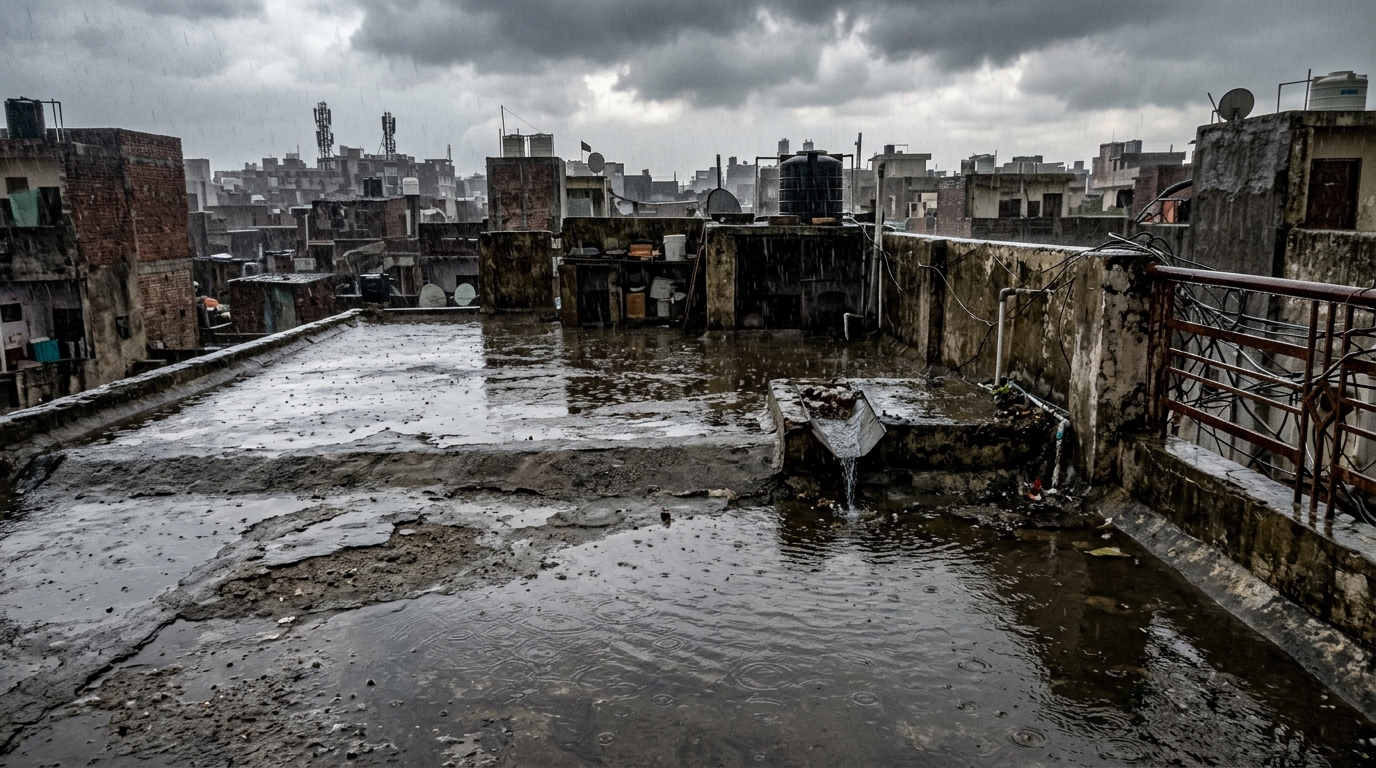
Standing water puddles around parapets and drain mouths after monsoon downpours. Hairline thermal fissures allow moisture to seep into top-floor ceiling slabs.
Explore Terrace Solutions →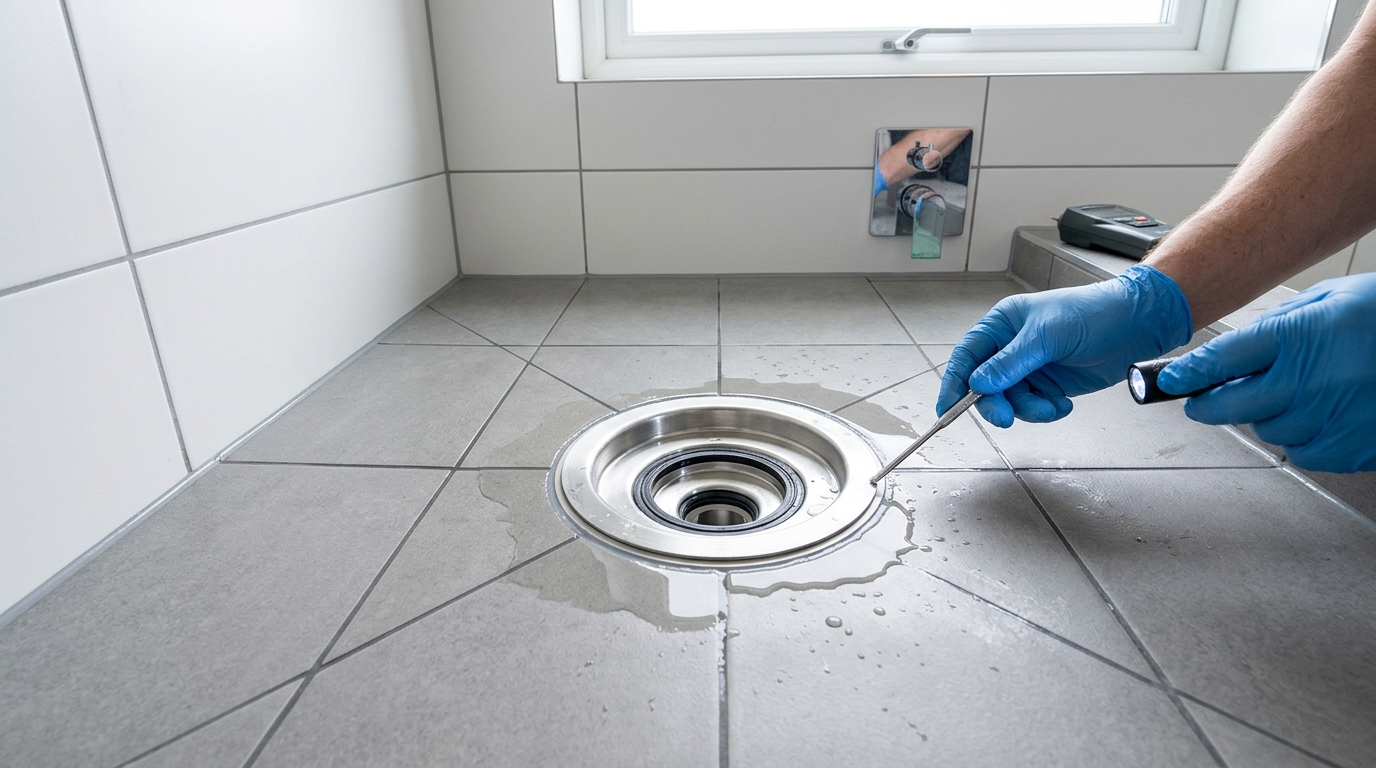 Symptom 02
Yellow water rings and damp spots appearing on the ceiling of the flat directly below. Usually caused by eroded tile grout or failed seals around floor drain collars.
Explore Bathroom Solutions →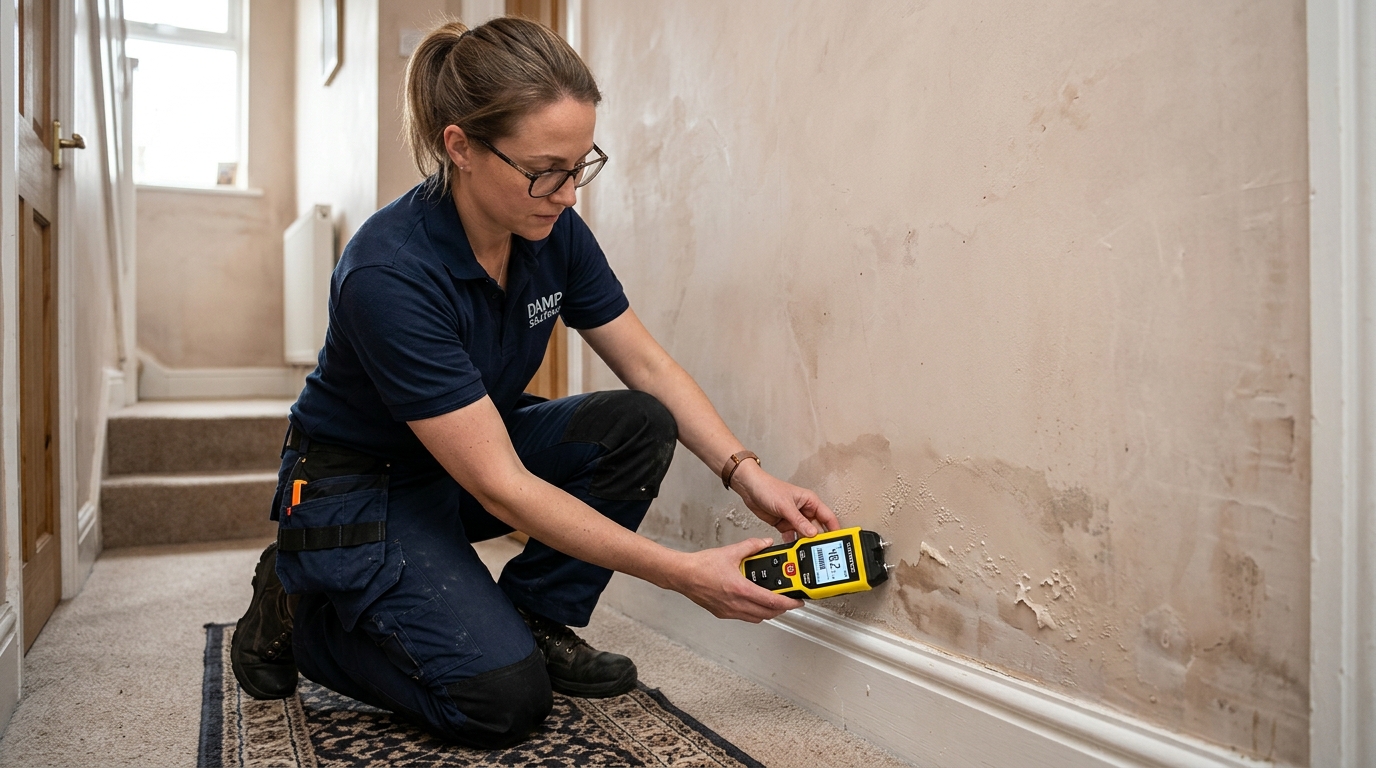 Symptom 03
Chalky white salt deposits (efflorescence/shora) and peeling wall putty near skirting boards. Caused by capillary suction of groundwater or unsealed exterior cracks.
Explore Wall Dampness Solutions →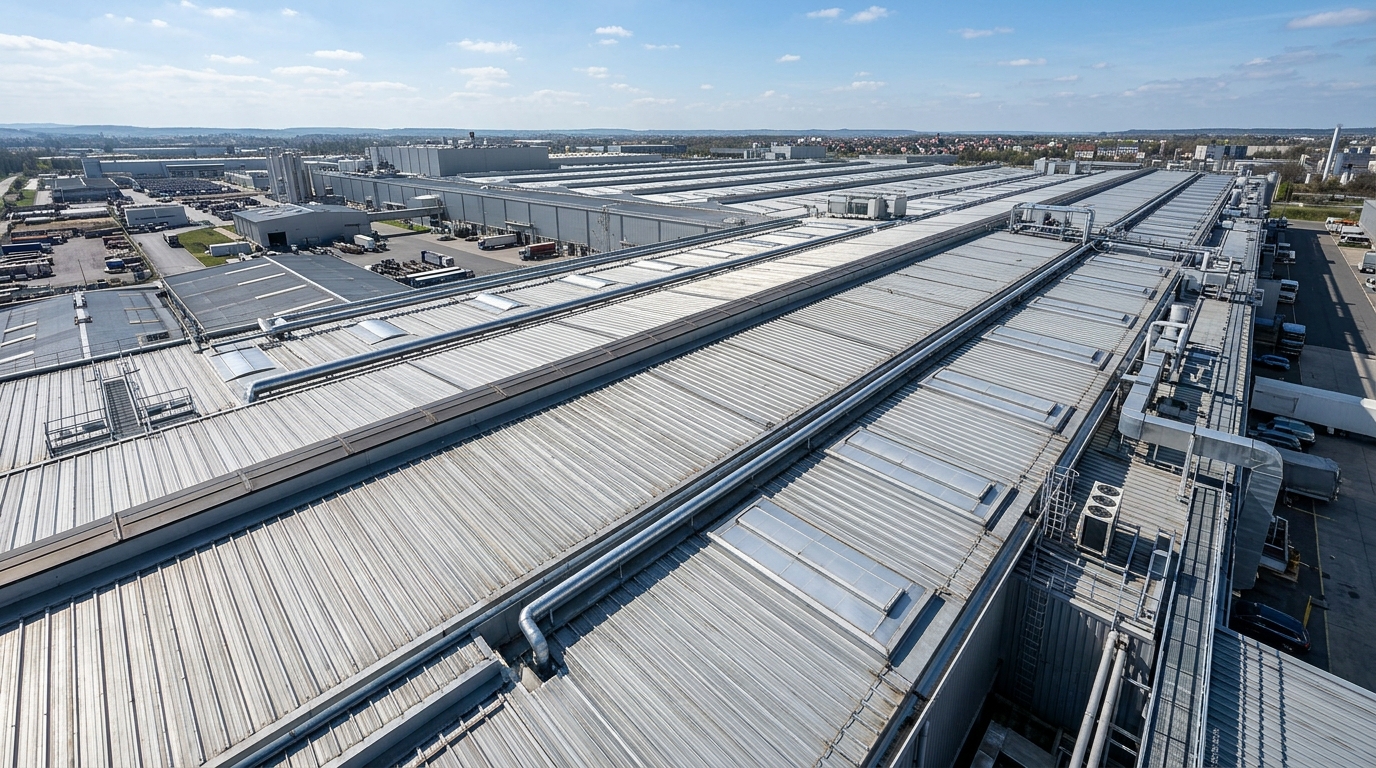 Symptom 04
Wind-driven rain dripping through corroded sheet screw washers or overflowing valley gutters, threatening factory machinery, inventory, and operations.
Explore Industrial Solutions →Because technical execution and warranties depend entirely on the contractor you hire, here is an essential 5-point checklist to review before signing an agreement:
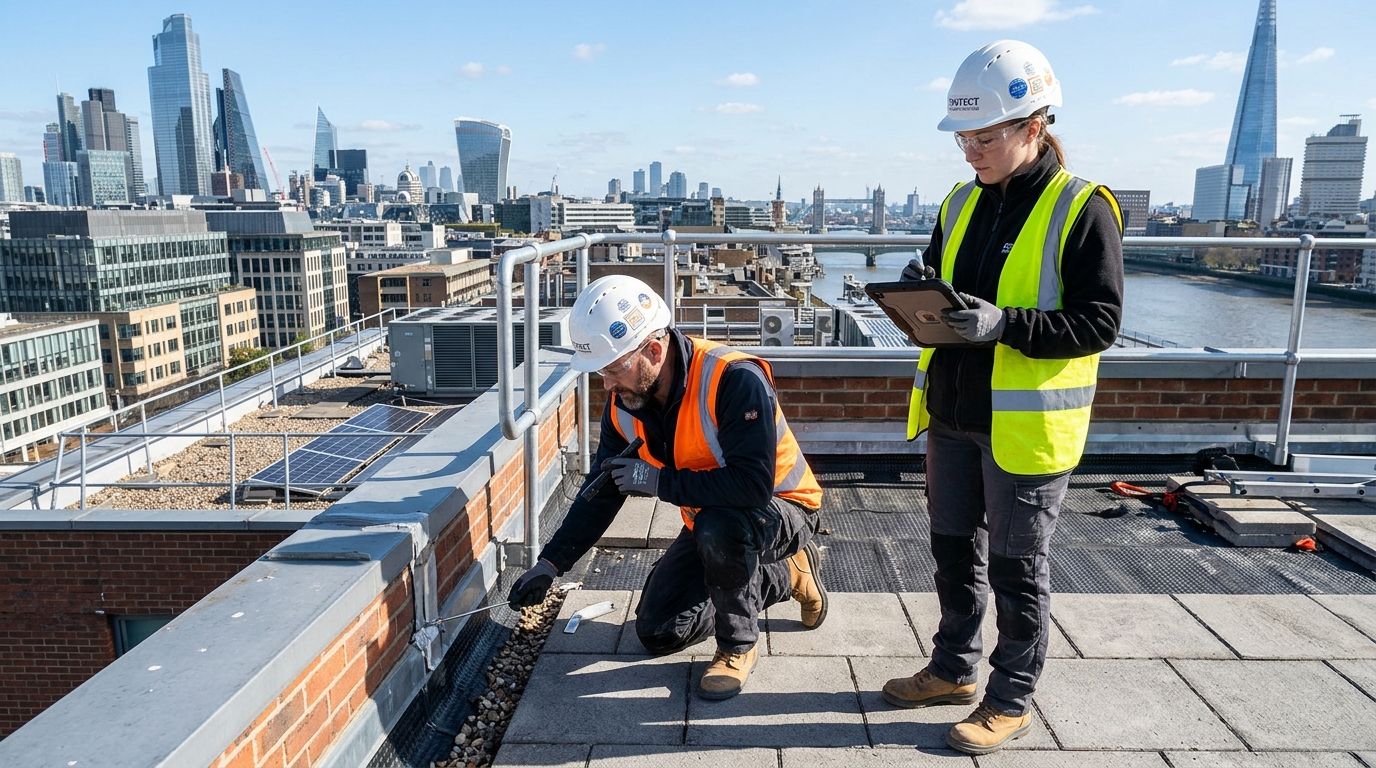
Tell us where your building is located. We will connect you with available independent contractors for an on-site evaluation.
Request Free Enquiry NowOur independent referral network covers major urban centers, residential suburbs, and prominent GIDC industrial corridors.
Ahmedabad presents diverse architectural archetypes, from heritage Pol structures in the walled city and low-rise suburban bungalows to 22-storey SG Highway towers and massive GIDC manufacturing estates.
Gandhinagar features wide planned sectors with low-density residential villas, institutional campuses, government quarters, and rapid vertical growth across the Kudasan-GIFT City corridor.
Known globally as the Milk Capital of India and an educational powerhouse, Anand district comprises high-density student residential complexes, modern apartment towers in Vallabh Vidyanagar, world-scale dairy processing plants, and historical coastal settlements in Khambhat. With extensive infrastructure investment, structures in Anand encounter demanding environmental pressures. Massive dairy and food processing plants require food-grade hygienic sealants that resist daily steam washdowns and lactic acid exposure. Concurrently, multi-storey residential complexes and standalone bungalows face heavy terrace thermal expansion, bathroom sunken slab leakage, and coastal humidity corrosion along the Gulf of Khambhat belt.
Vadodara, Gujarat’s premier cultural and industrial nexus, encompasses a sophisticated architectural mix ranging from royal palaces and colonial-era structures to high-rise glass-and-concrete corporate campuses, massive pharmaceutical facilities, and dense residential societies. Properties across Vadodara face distinct hydrological and environmental stressors. In neighborhoods along the Vishwamitri River basin—such as Fatehgunj, Karelibaug, and Sama—seasonal water table surges create massive hydrostatic pressure that drives water through basement retaining walls, lift pits, and underground parking lots. Simultaneously, heavy chemical and engineering clusters in Makarpura, Nandesari, and Savli demand specialized acid-resistant containment, whereas residential societies in Alkapuri, Gotri, and Vasna require durable terrace and bathroom waterproofing.
Surat, Gujarat’s economic powerhouse globally celebrated for its diamond cutting, synthetic textile manufacturing, and massive petrochemical complexes at Hazira, is characterized by dense high-rise residential towers and sprawling industrial estates. Situated along the Tapi River basin adjacent to the Arabian Sea, Surat receives heavy, concentrated monsoon rainfall often exceeding 1,200 mm to 1,500 mm. Multi-storey residential societies in Vesu, Adajan, Pal, and Althan face relentless horizontal rain driven by coastal winds, causing severe water penetration around aluminum window frames, balcony perimeter junctions, and external wall micro-cracks. In textile and chemical belts across Sachin and Pandesara GIDC, constant steam emission, caustic washdown, and acid vapours demand heavy-duty, chemical-resistant roof and floor waterproofing.
Bharuch district, nestled along the historic estuary of the Narmada River, is internationally recognized as Asia’s foremost chemical and pharmaceutical hub. Encompassing Ankleshwar GIDC, the sprawling Dahej Petroleum, Chemicals and Petrochemicals Investment Region (PCPIR), Panoli GIDC, and Jhagadia industrial estates, Bharuch presents the most aggressive environmental challenges in western India. Structures are subjected to high atmospheric concentrations of sulfur dioxide, chlorine fumes, and chemical aerosols combined with heavy monsoon precipitation and coastal saline winds from the Gulf of Khambhat. Industrial factory roofing sheets suffer severe accelerated corrosion, while residential and commercial buildings across Bharuch and Ankleshwar experience structural rebar carbonation, terrace cracking, and basement flooding.
Valsad district, situated at the southernmost tip of Gujarat bordering Maharashtra, is famed as Gujarat’s high-rainfall belt and the home of Vapi GIDC—one of Asia’s largest chemical, pharmaceutical, paper, and packaging industrial hubs. Receiving some of the highest precipitation in the state, often exceeding 2,000 mm to 2,500 mm during monsoon, properties in Valsad endure intense hydrostatic and hydraulic stress. Vapi’s massive industrial manufacturing sheds face catastrophic roof leaks through corroded J-bolts, overflowing valleys, and chemical vapour degradation. Simultaneously, residential apartment complexes in Valsad city, Umbergaon, and Pardi experience persistent terrace water ponding, window sill infiltration, and basement flooding from a saturated water table.
Rajkot, the commercial and engineering capital of Saurashtra, is globally known for machine tools, casting foundries, auto-parts manufacturing, and kitchenware. From sprawling industrial estates in Metoda GIDC, Shapar-Veraval, and Aji GIDC to fast-expanding high-rise residential developments along 150 Feet Ring Road and Kalawad Road, structures face extreme seasonal wear. Rajkot experiences blistering summer heat frequently crossing 44°C, inducing severe thermal shock that expands and cracks traditional china mosaic terraces and parapet joints. In industrial machine shops and foundries, large-span corrugated metal roofs develop leaks around oxidized J-bolts, vibrating sheet laps, and flashing valleys, risking damage to sensitive CNC machinery and electrical control panels.
Morbi is the undisputed Ceramic Capital of India, producing over 90% of the nation’s ceramic tiles, sanitaryware, and quartz slabs across hundreds of mega industrial plants lining the Morbi-Wankaner and Morbi-Halvad highways. The scale of manufacturing sheds in Morbi is colossal, often spanning tens of thousands of square meters under metal roofing. Structures in Morbi endure extreme thermal conditions: ambient summer temperatures above 43°C compounded by intense radiant heat from continuous ceramic roller kilns exceeding 50°C to 60°C near roof trusses. This massive thermal expansion and contraction tears open sheet seams, shears fastener heads, and fractures valley gutters. During monsoon downpours, water entering high-bay sheds risks ruining finished tile inventory, packaging boxes, and delicate electronic glazing printers.
Jamnagar, celebrated as the Brass City of India and home to the world’s largest oil refining complexes at Moti Khavdi and Vadinar, sits on the southern coast of the Gulf of Kutch. Encompassing vast brass extrusion clusters in Dared GIDC Phase I-III, defense establishments, and coastal townships, structures in Jamnagar endure an aggressive combination of maritime salinity, industrial sulfur and hydrocarbon fallout, and extreme summer temperatures exceeding 42°C. Salt-laden humid winds sweeping inland accelerate concrete rebar oxidation, causing extensive spalling and cracking in residential slabs across Patel Colony, Indira Marg, and Digjam Circle. In brass foundries and extrusion mills, acidic pickling vapours corrode galvanized roofing sheets within years, causing severe leaks during monsoons.
Gir Somnath district, anchored by the major commercial fishing and trading port of Veraval and globally celebrated for the first Aadi Jyotirlinga Shree Somnath Temple, is a dynamic coastal corridor. Stretching along the southern Arabian Sea shoreline, the district features hundreds of seafood processing factories, deep-freeze cold storage plants, ice factories, and maritime boat building docks in Veraval GIDC and Patan-Somnath. Structures face extreme coastal exposure: continuous salt spray, high humidity above 85%, and wet-process operations in fishery facilities where saltwater washdown constantly erodes floors and walls. Concurrently, pilgrim dharamsalas, hotels, and residential buildings experience rapid rebar corrosion, ceiling concrete spalling, and severe terrace leakage under violent monsoon sea gales.
Bhavnagar, strategically positioned along the western rim of the Gulf of Khambhat, is globally renowned for the Alang-Sosiya ship recycling yard—the largest in the world—alongside dense diamond cutting industries, rolling mills, and engineering clusters in Chitra and Vartej GIDC. The district encompasses a rich architectural fabric, from royal heritage palaces like Nilambag to dense residential societies in Kaliyabid, Sardarnagar, and Ghogha Road. The coastal atmosphere, laden with saline mist from the Gulf of Khambhat, aggressively attacks concrete reinforcement bars, leading to premature carbonation and spalling in residential slabs. In heavy industrial sheds across Alang and Chitra, vibrating cranes and thermal variations cause extensive roof seam openings, sheared fasteners, and severe monsoon leaks.
Kachchh, the largest district in India, is a region of extraordinary strategic and economic significance. Anchored by the historic capital Bhuj, the bustling commercial hub of Gandhidham, and two of India’s busiest maritime gateways—Deendayal Port at Kandla and the country’s largest commercial private port and SEZ at Mundra—the district combines heavy maritime logistics with an arid desert landscape. Positioned in the highest earthquake risk category (Seismic Zone V), buildings in Kachchh are subject to subtle micro-seismic structural vibrations as well as dramatic day-night temperature swings exceeding 20°C. Massive logistics warehouses and industrial plants across Gandhidham, Kandla, and Mundra face aggressive marine salt air and monsoon storm gales that corrode metal roofing sheets, shear fasteners, and flood valley gutters. Residential structures across Bhuj, Anjar, and Mandvi require highly flexible, elastomeric waterproofing systems capable of bridging structural micro-movements without tearing.
Practical advice researched and written specifically for Gujarat homeowners, housing societies, and factory managers.
How 45°C summer heat cycles create microscopic fissures in China mosaic terraces, leading to unexpected ceiling drips when southwest monsoons arrive.
Read Full Guide →Modern non-invasive techniques including two-part epoxy grouting and polyurethane pressure injection to fix apartment toilet leaks without tearing up flooring.
Read Full Guide →A step-by-step diagnostic process to differentiate between rising dampness from ground level and active concealed pipe fractures before breaking walls.
Read Full Guide →Practical answers to common waterproofing doubts, contractor evaluation, and our referral process.
WaterproofingConnect is an independent lead-generation and referral platform. When you submit your leakage details and location, we forward your enquiry to suitable, independent waterproofing service providers in Gujarat who can contact you directly to arrange an inspection and provide a quotation. There is zero obligation to accept any contractor’s offer.
Yes, submitting an enquiry through our platform is 100% free for homeowners, society committees, and factory managers. We do not charge customers any fee for connecting them with local service providers.
No. WaterproofingConnect is an independent referral platform, not a waterproofing contractor. The actual on-site technical inspection, material recommendation, labor, quotation, workmanship, and written warranty are provided directly and solely by the independent contractor you choose to hire.
In many cases, yes. If the existing China mosaic layer is structurally sound and well bonded to the slab, contractors can deep-clean the joints, apply specialized polymer crack fillers, and install high-grade transparent or reflective elastomeric coatings over the tiles. However, if water has caused large-scale debonding or hollow sounds underneath the tiles, localized removal may be necessary.
Yes, if the seepage is caused by deteriorated tile joints, micro-gaps around the drain trap collar, or minor plumbing joint looseness, modern no-demolition chemical treatments can often succeed. Contractors use waterproof epoxy grouting, crystalline penetrants, and PU injection grouting into the sunken slab. If a concealed water supply pipe is fractured, plumbing pressure testing will identify the exact spot to minimize tile damage.
Costs typically depend on: 1) Total surface area (sq. ft.), 2) Type of surface (RCC slab, China mosaic, GI sheet, brick wall), 3) Extent of surface preparation needed (grinding, plaster removal, crack routing), 4) Material quality chosen (acrylic vs polyurethane vs crystalline vs polyurea), and 5) Accessibility (ground floor vs multi-story exterior facade requiring scaffolding).
Always ask: 1) What specific brand and chemical formulation will you apply? 2) How many coats will you apply and what is the drying interval? 3) How will you treat cracks and corner junctions (coving)? 4) Do you conduct a ponding water test for 48 hours upon completion? 5) What does your written warranty cover (labor, materials, or both)?
Submit a free enquiry now. We forward your requirements to independent waterproofing contractors serving your area in Gujarat.